Written by Marina Jahan · Reviewed by Shamayun Chowdhury, ACMA, MAAT · Published: 18 October 2026 · Last reviewed: October 2026 · Applies to the 2026/27 tax year
MerinTaxReturn is an information website. It does not prepare accounts or tax returns and does not give personal tax advice.
Quick Answer
Do you pay VAT on food? Usually not. Most groceries are zero-rated in the UK. Shoppers only pay 20% VAT on certain items, such as sweets, crisps, soft drinks, hot takeaways and restaurant meals, and it is already in the price. Food businesses charge that VAT, record it and pay it to HMRC through their VAT return.
Most people never see a separate VAT bill for their shopping, so it is fair to wonder how do you pay VAT on food at all. The honest answer depends on which side of the counter you stand. A shopper pays it without noticing, folded into the till price. A café owner collects it from customers and passes it on to HMRC every quarter.
This guide follows the money both ways. We explain which food carries VAT, why the same sandwich can be taxed differently in two settings, and how a food business actually hands the tax over. Every rule comes from HMRC’s VAT Notices 701/14 and 709/1 and from GOV.UK, checked in October 2026.
Key takeaways
- Most everyday food is zero-rated: VAT applies, but at 0%.
- Confectionery, crisps, ice cream, soft drinks, bottled water and alcohol are standard-rated at 20%.
- Restaurant meals, food eaten on the premises and hot takeaway food are always standard-rated.
- Shoppers pay VAT inside the price; they never pay HMRC directly.
- VAT-registered food businesses pay HMRC by one calendar month and 7 days after each VAT period ends.
In this guide
How Do You Pay VAT on Food? The Short Answer
Value added tax on food works like VAT on anything else: it is a tax on sales, collected in stages and finally carried by the end customer. What makes food VAT unusual is that most of it is charged at 0%, so the tax exists in law but adds nothing to the price.
There are two payers to keep apart:
- The customer pays any VAT in food as part of the price on the shelf, menu or app. There is no form to fill in and nothing to send to HMRC.
- The VAT-registered seller adds the correct rate to each sale, keeps digital records and pays the total, less any VAT it can reclaim on its own costs, to HMRC.
Zero-rated is not the same as exempt
A zero-rated sale is still a taxable sale, just at 0%. That matters to sellers: zero-rated sales count towards the VAT registration threshold, and the business can usually reclaim VAT on its costs. Exempt sales are treated differently.
Which Food Has VAT in the UK?
Is there VAT on food in the UK? For a typical weekly shop, very little. The legal starting point is Schedule 8, Group 1 of the VAT Act 1994, which zero-rates “food of a kind used for human consumption”, and then lists exceptions. The table below sums up how food VAT UK rules split.
| Type of food or drink | VAT rate | Where the rule sits |
|---|---|---|
| Bread, meat, fish, fruit, vegetables, cheese, eggs | 0% | Notice 701/14, section 2.2 |
| Tea, coffee and cocoa bought to make at home; milk | 0% | Notice 701/14, section 3.7 |
| Cold sandwiches and cold takeaway food | 0%, unless eaten on the premises | Notice 701/14, section 3.3 |
| Confectionery, chocolate biscuits, ice cream | 20% | Notice 701/14, sections 3.5–3.6 |
| Crisps, salted nuts and savoury snacks | 20% | Notice 701/14, section 3.8 |
| Fizzy drinks, juices, squash, bottled water, alcohol | 20% | Notice 701/14, section 3.7 |
| Restaurant meals, eat-in food, hot takeaways | 20% | Notice 709/1 |
Zero-rated everyday food
Staples you cook or eat at home are zero-rated. That is why a supermarket receipt for vegetables, pasta and chicken normally shows no VAT, even though the shop is VAT-registered.
Food with VAT: the standard-rated exceptions
The exceptions are mostly treats and drinks. Some borderlines catch people out: a cake is zero-rated, but a biscuit wholly or partly covered in chocolate is standard-rated. Milk and plain tea bags stay at 0%, while a bottle of water carries 20%. When people search for vat on food uk, these small distinctions are usually what they are trying to pin down.
How Do You Pay VAT on Food as a Shopper?
So how do you pay VAT on food at the checkout? You pay it the same way you pay it on shoes or a phone charger: it is already inside the price. UK shops show VAT-inclusive prices to consumers, so the figure on the shelf label is what you hand over. Nobody sends you a bill, and you never deal with HMRC about it.
To see the VAT hidden in a 20% item, divide the price by 6. A £2.40 bottle of cola contains £0.40 of VAT; a £2.40 loaf contains none.
Example scenario: one basket, two VAT rates
| Item | Price paid | Rate | VAT inside |
|---|---|---|---|
| Loaf of bread | £1.40 | 0% | £0.00 |
| Chicken breasts | £5.00 | 0% | £0.00 |
| Multipack of crisps | £1.80 | 20% | £0.30 |
| Bottle of cola | £2.40 | 20% | £0.40 |
| Total | £10.60 | £0.70 |
Illustrative prices only. On a typical receipt, standard-rated lines are flagged with a letter or symbol and the VAT total is printed at the bottom.
If you are a sole trader buying food for your business, the same receipt matters. A VAT-registered business may be able to reclaim the £0.70 on its own VAT return, but only if the purchase is genuinely for the business, not personal meals.
Is There VAT on Restaurant Food?
Yes. Is there VAT on restaurant food even when every dish uses zero-rated ingredients? It still carries 20%. HMRC treats a restaurant meal as catering, a supply that includes a significant element of service, rather than a sale of groceries. Food and drink eaten on the premises where it is sold is always standard-rated (Notice 709/1, section 3).
“Premises” is wider than the dining room. It includes any seating set aside for the seller’s customers, such as tables on the pavement outside a café or a shared food-court area. Public benches in a shopping centre or a park do not count.
- A service charge added to the bill is standard-rated, so VAT applies to it.
- A genuinely voluntary tip left on top of the bill is outside the scope of VAT.
Do You Pay VAT on Takeaway Food?
It depends on temperature. Do you pay VAT on takeaway food? Cold takeaway food, such as a sandwich or a salad box, is zero-rated, provided it is not an always-taxable item like crisps. Hot takeaway food is standard-rated. That is why VAT on takeaway food can differ on two items bought in the same queue.
Under Notice 709/1, section 4, takeaway food that is above room temperature when handed over is standard-rated if at least one of these tests is met:
The five hot food tests
- It was heated so that it could be eaten hot.
- It was heated to order.
- It was kept hot after heating, for example in a heated cabinet.
- It was handed over in packaging designed to keep it hot.
- It was advertised or marketed as hot.
Two points often surprise people. Calling bread or pastries “freshly baked” does not make them hot food, so warm-from-the-oven items that are left to cool can stay zero-rated. But if a shop lets customers heat food in a microwave it provides, that food becomes standard-rated.
Is there VAT on coffee?
It depends on how it is sold. A jar of instant coffee or a bag of beans from the supermarket is zero-rated. A latte from a café counter is a hot drink, and VAT on coffee sold that way is always 20%, whether you drink it inside or take it away. The same applies to tea and hot chocolate.
How Do You Pay VAT on Food as a Business?
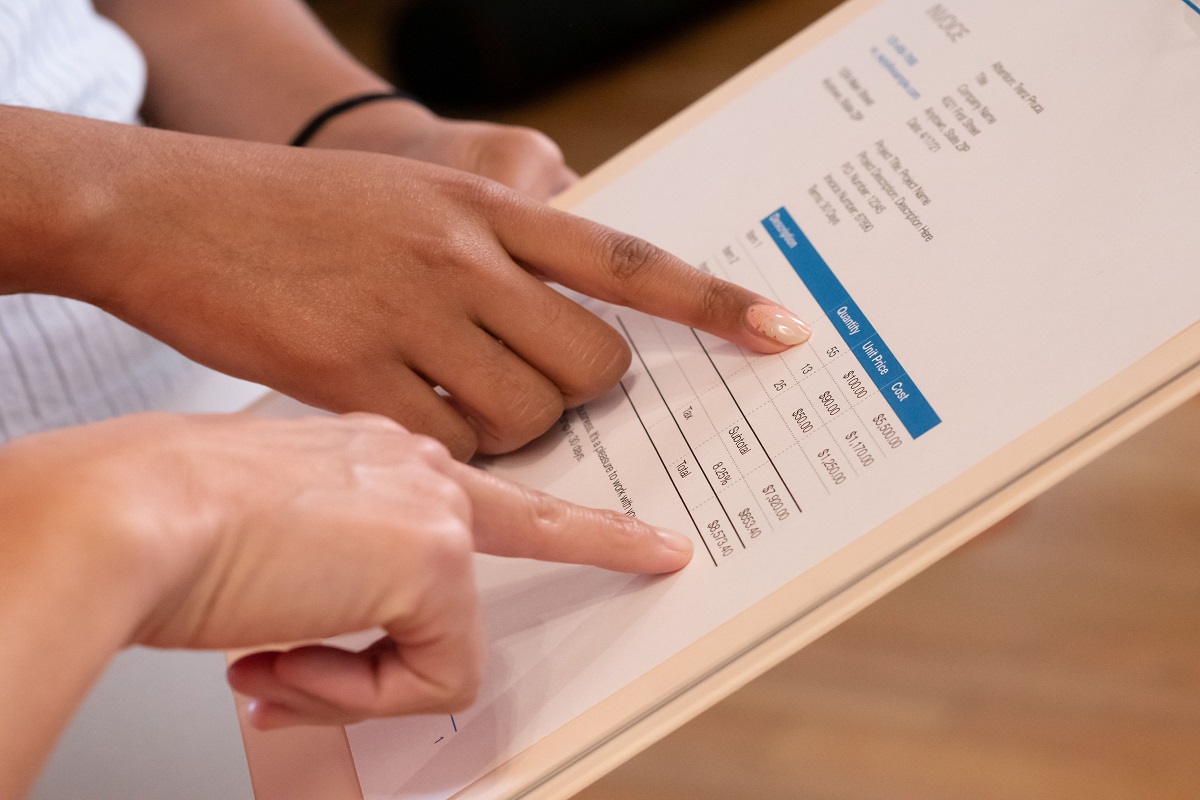
For cafés, restaurants, takeaways, caterers and food shops, the question flips. How do you pay VAT on food when you are the seller? You add VAT to standard-rated sales, keep digital records, and pay the balance to HMRC after each VAT period. Hospitality VAT is mostly about getting the 20% / 0% split right on every sale.
Do food businesses have to register?
You must register for VAT if your taxable turnover for the last 12 months goes over £90,000, or you expect it to go over £90,000 in the next 30 days alone. Zero-rated food sales count towards that figure. A business whose sales are mostly zero-rated, such as a greengrocer, can apply to HMRC for an exemption from registration, but it needs HMRC’s approval and cannot then reclaim VAT on its costs.
Registered late?
If you should have registered and did not, HMRC can ask for the VAT on sales made since the date you should have registered, even though you never charged it to customers, and may add a penalty.
Paying HMRC: step by step
- Set the right rate for each product. Code your till or EPOS so hot food, hot drinks, eat-in sales, confectionery and soft drinks are at 20%, and cold takeaway food is at 0%.
- Split eat-in and takeaway sales. If you offer seating, the same cold item can be 20% eaten in and 0% taken away. Record which is which, because HMRC expects evidence for the split.
- Keep digital records. Under Making Tax Digital, VAT-registered businesses keep digital records and file through compatible software.
- Work out output and input VAT. Output VAT is the VAT you charged on sales; input VAT is the VAT you paid on business costs that you are entitled to reclaim.
- Submit the VAT return. It is usually due one calendar month and 7 days after the end of the VAT period.
- Pay by the same deadline. The money must reach HMRC’s account by that date, so allow time for it to clear. Weekends and bank holidays do not move the deadline. Payment options, including Direct Debit, are listed on GOV.UK.
In your accounts, VAT you have collected but not yet paid is money owed to HMRC, so it sits with your creditors until the payment goes out.
Worked Example: A Café’s VAT Quarter
Example scenario (illustrative): a VAT-registered café, quarter ending 30 September 2026
| Sales (before VAT) | Net sales | Rate | VAT |
|---|---|---|---|
| Eat-in meals and all hot drinks | £18,000 | 20% | £3,600 |
| Hot takeaway food | £6,000 | 20% | £1,200 |
| Cold takeaway sandwiches and salads | £5,000 | 0% | £0 |
| Crisps, chocolate and soft drinks to take away | £2,000 | 20% | £400 |
| Total sales / output VAT | £31,000 | £5,200 |
- Most ingredients the café buys are zero-rated, so they carry no VAT to reclaim.
- Standard-rated costs (energy, packaging, cleaning products, a new coffee grinder) total £7,500 before VAT, giving input VAT of £1,500.
- VAT due to HMRC: £5,200 − £1,500 = £3,700.
- Deadline for the return and payment: 7 November 2026 (one month and 7 days after 30 September).
Notice what the customer never sees: £3,700 leaves the café’s bank account, but every penny of it came from customers who paid VAT-inclusive prices. The café is a collector, not the final payer.
Reviewer’s View: common mistakes with VAT on food
| Mistake | What the rules say |
|---|---|
| Zero-rating a hot pasty because it was “just baked” | Kept hot in a heated cabinet, it meets a hot food test and is 20% |
| Putting every cold sale through as takeaway | Cold food eaten at your tables is standard-rated |
| Offering customers a microwave | Food heated in it becomes standard-rated |
| Leaving the service charge out of VAT | Service charges are standard-rated; only voluntary tips are outside VAT |
| Ignoring turnover from zero-rated sales | Zero-rated sales count towards the £90,000 threshold |
| Paying on the deadline day by a slow method | Payment must have cleared into HMRC’s account by the deadline |
How Do You Pay VAT on Food? FAQs
Do you pay VAT on food in UK supermarkets?
Only on some items. Most groceries, such as bread, meat, vegetables, milk and tea bags, are zero-rated. Sweets, crisps, ice cream, soft drinks, bottled water and alcohol carry 20% VAT, which is already included in the shelf price.
Do restaurants charge VAT?
Yes, if they are VAT-registered. Restaurant meals and drinks served for eating on the premises are standard-rated at 20%, even when the ingredients themselves would be zero-rated in a shop. Service charges are also standard-rated.
Is a sandwich zero-rated?
A cold sandwich sold to take away is normally zero-rated. The same sandwich becomes standard-rated if it is eaten at the seller’s own tables, toasted or heated to order, or supplied as part of a catering contract.
Is food delivery subject to VAT?
Delivered hot, ready-to-eat meals are treated as catering and are standard-rated. Delivered groceries that the customer still has to prepare are not catering, so eligible items keep their zero rate.
Was there a reduced VAT rate on children’s meals in 2026?
HMRC’s food notice refers to a temporary reduced rate of VAT on certain supplies of children’s meals between 25 June and 1 September 2026. That period has ended, so check the current version of Notice 701/14 for the rules that apply now.
Do food businesses have to register for VAT?
Yes, once taxable turnover goes over £90,000 in a rolling 12 months, or is expected to go over £90,000 in the next 30 days. Zero-rated food sales count towards this. A business with mostly zero-rated sales can apply to HMRC for exemption from registration.
How do you pay VAT on food sales to HMRC?
A VAT-registered food business submits its VAT return through Making Tax Digital software and pays the VAT due by one calendar month and 7 days after the end of the VAT period, using Direct Debit or another method listed on GOV.UK.
Final Verdict: How Do You Pay VAT on Food?
How do you pay VAT on food? As a shopper, you pay it only on standard-rated items, such as sweets, crisps, soft drinks, hot takeaways and restaurant meals, and it is already in the price. As a VAT-registered food business, you charge the right rate on each sale, split eat-in from takeaway, and pay HMRC the balance by one month and 7 days after each VAT period ends.
Useful next steps
- Check a specific product against HMRC’s VAT Notice 701/14 on food products.
- If you sell hot food or have seating, read VAT Notice 709/1 on catering and takeaway food.
- Check your next deadline on GOV.UK’s VAT return deadlines page and see the payment options on Pay your VAT bill.
SC
Reviewed by
Shamayun Chowdhury
BA (Hons), MSc, ACMA, CMA, CIPFA (Affil), MAAT, AATQB
Senior Accountant · Leicester
Director, Major Accountancy Ltd
Director, Eternity Accountants Ltd
Lecturer, Nottingham Trent University
15+ years’ UK practice
Director, Eternity Accountants Ltd
Lecturer, Nottingham Trent University
15+ years’ UK practice
Shamayun is a chartered management accountant (ACMA) and a full member of AAT. He reviews every MerinTaxReturn guide against current GOV.UK and HMRC rules before publication.
How we checked this guide: VAT liability of food from HMRC VAT Notice 701/14 (Food products) and Schedule 8, Group 1 of the VAT Act 1994; catering, eat-in and hot takeaway rules from VAT Notice 709/1; registration threshold, return deadlines and payment from GOV.UK; every figure in the worked examples recalculated before publishing.
MerinTaxReturn is an information website. It does not prepare accounts or tax returns and does not give personal tax advice.
This article is general information, not personal tax advice. Speak to an accountant about your own circumstances.
We review this guide every 12 months, or sooner if HMRC guidance changes. Last reviewed: October 2026.
Sources (accessed 18 October 2026)